
Leave A Message
If you are interested in our products and want to know more details,please leave a message here,we will reply you as soon as we can.

-
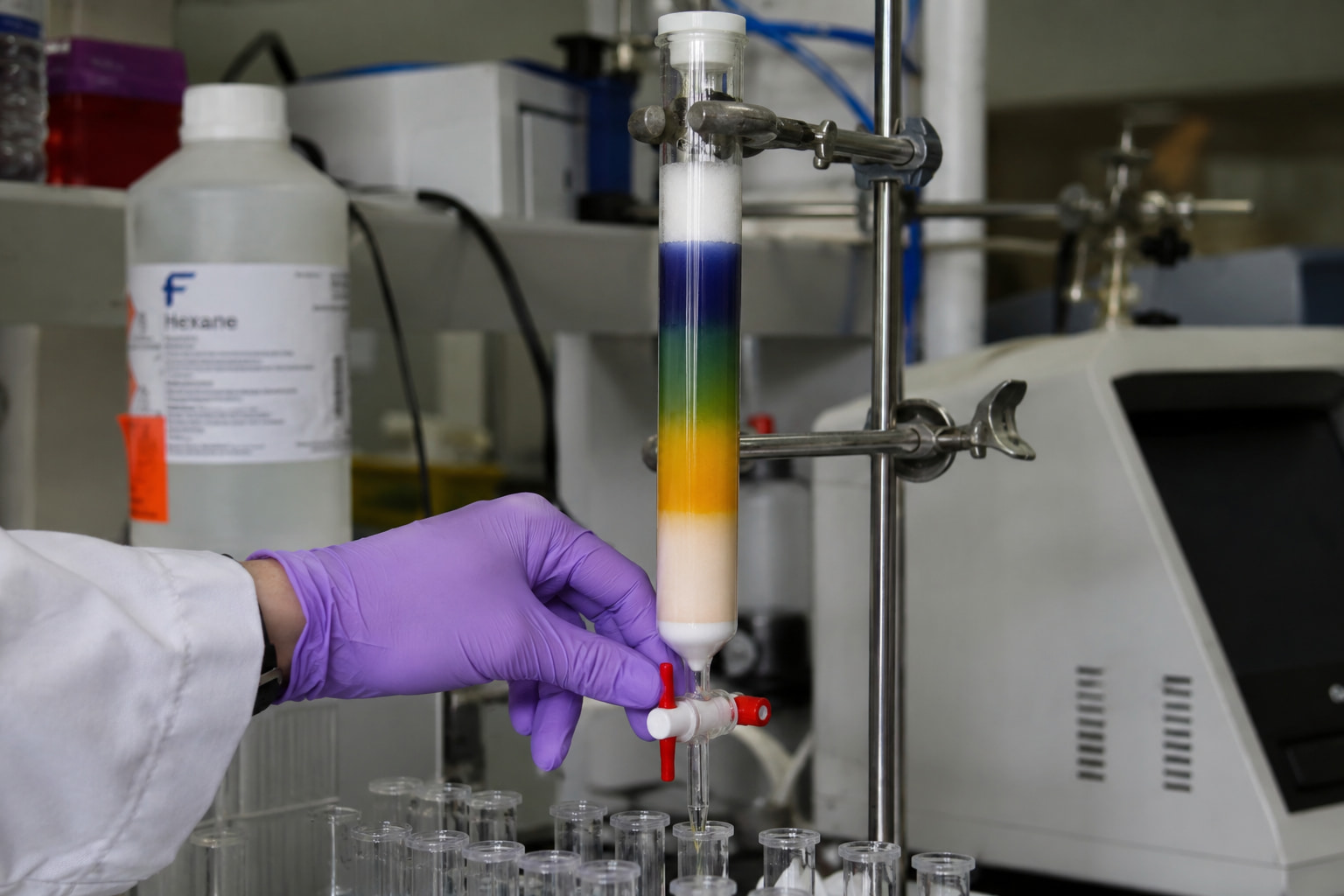
History of chromatography
The method was developed by botanist Mikhail Tsvet in 1901–1905 in the universities of Kazan and Warsaw. He developed the technique and coined the term chromatography in the first decade of the 20th century, primarily for the separation of plant pigments such as chlorophyll, carotenes, and xanthophylls.
Since these components separate in bands of different colors (green, orange, and yellow, respectively) they directly inspired the name of the technique. New types of chromatography developed during the 1930s and 1940s made the technique useful for many separation processes.
What Is Chromatography
In chemical analysis, chromatography is a laboratory technique for the separation of a mixture into its components. The mixture is dissolved in a fluid solvent (gas or liquid) called the mobile phase, which carries it through a system (a column, a capillary tube, a plate, or a sheet) on which a material called the stationary phase is fixed.
As the different constituents of the mixture tend to have different affinities for the stationary phase and are retained for different lengths of time depending on their interactions with its surface sites, the constituents travel at different apparent velocities in the mobile fluid, causing them to separate. The separation is based on the differential partitioning between the mobile and the stationary phases. Subtle differences in a compound's partition coefficient result in differential retention on the stationary phase and thus affect the separation.
Classification
Gas chromatography employs an inert carrier gas as the mobile phase to separate volatile and thermally stable compounds.
It offers excellent separation efficiency, high sensitivity, and rapid analysis, making it a standard technique for environmental monitoring, petrochemical analysis, food safety, and forensic science.
WLiquid chromatography utilizes a liquid mobile phase to separate compounds based on their interactions with the stationary phase.
It is suitable for non-volatile, polar, high-molecular-weight, or thermally unstable compounds and has become one of the most widely used analytical techniques in chemical, pharmaceutical, biological, and environmental laboratories.
SFC employs supercritical carbon dioxide, often with organic modifiers, as the mobile phase.
It integrates the high efficiency of gas chromatography with the versatility of liquid chromatography, while significantly reducing solvent use, making it a green and efficient technique for pharmaceutical, chiral, and natural product analysis.
--
Ion exchange chromatography separates charged molecules through reversible electrostatic interactions between analytes and ion exchange resins.
It is widely used for the purification and separation of inorganic ions, proteins, nucleic acids, rare earth elements, and isotopes, and serves as the primary chromatographic mode employed in PFA microcolumn applications for ICP-MS sample preparation.
Affinity chromatography achieves highly selective separation by exploiting specific biological interactions, such as antigen–antibody, enzyme–substrate, or receptor–ligand binding.
Owing to its exceptional selectivity and purification efficiency, it is extensively used in protein purification, antibody production, enzyme isolation, and biopharmaceutical manufacturing.
Size-exclusion chromatography separates molecules according to their hydrodynamic size without relying on chemical interactions with the stationary phase. Larger molecules elute first because they are excluded from the pores of the stationary phase, whereas smaller molecules penetrate the pores and elute later. SEC is widely applied for polymer characterization, protein purification, and molecular weight determination.
PFA Microcolumn & Ion Exchange chromatography
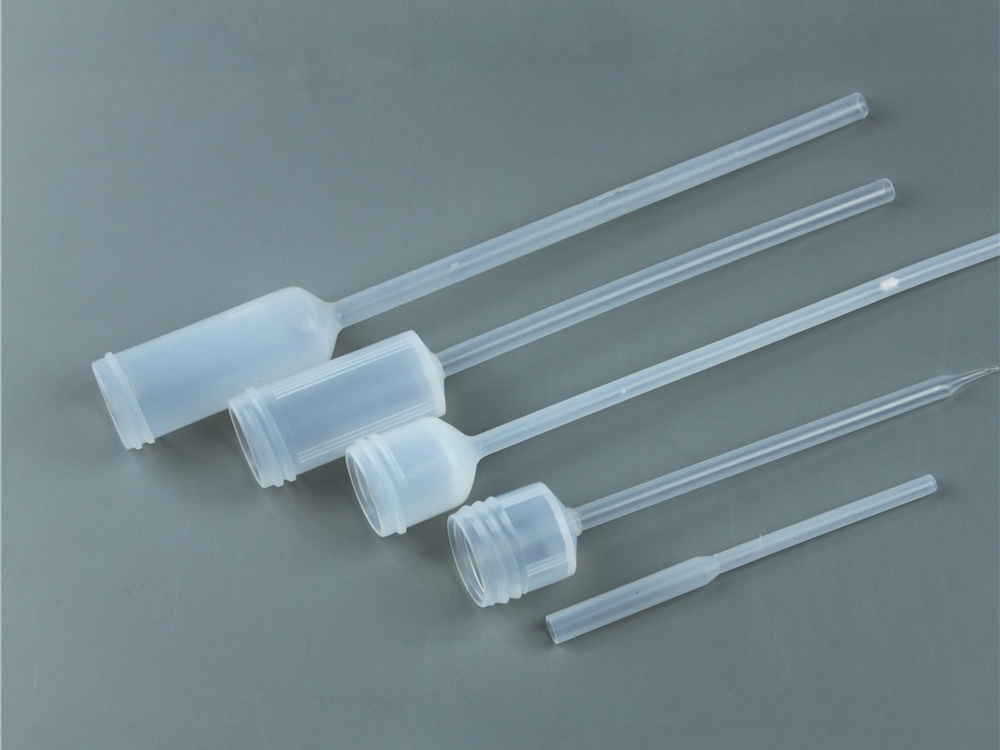
About PFA microcolumn
A PFA microcolumn is a high-purity fluoropolymer chromatography column designed for ultra-trace elemental analysis, ion exchange chromatography, and ICP-MS sample preparation workflows.
It is commonly used for matrix removal, analyte purification, trace metal enrichment, and isotope separation in highly corrosive acid systems.
• Excellent Chemical Resistance: Outstanding resistance to highly corrosive acids, alkalis, and oxidizing agents.
• Ultra-Low Trace Metal Background: PFA is widely used in cleanroom and ultra-trace analytical environments.
• Excellent Thermal Stability: -200℃~260℃, suitable for high-temperature acid digestion and purification applications.
• Non-Wetting and Low Adsorption Surface: To minimize analyte adsorption and sample carryover, which is critical for ultra-trace elemental analysis.
--
Leave A Message