


Leave A Message
Leave A Message
If you are interested in our products and want to know more details,please leave a message here,we will reply you as soon as we can.
submit

Bottom Design

Home NJbinglab Techniques

Bottom Design

PFA Digestion Vessels: Flat, V-Shaped and U-Shaped Bottoms Explained.


Choosing a PFA digestion vessel involves more than selecting its capacity. The internal bottom shape affects where a small volume of liquid collects and how easily residues can be rinsed and transferred. These details matter when a preparation method includes digestion, evaporation, redissolution and transfer before trace-element or isotope analysis.


Flat, V-shaped and U-shaped interiors serve different handling needs. The right choice depends on the steps in your method, particularly what happens when little solution remains.  

--------------占位---------------


  • #

    Flat Bottom: A Broad Interior Base

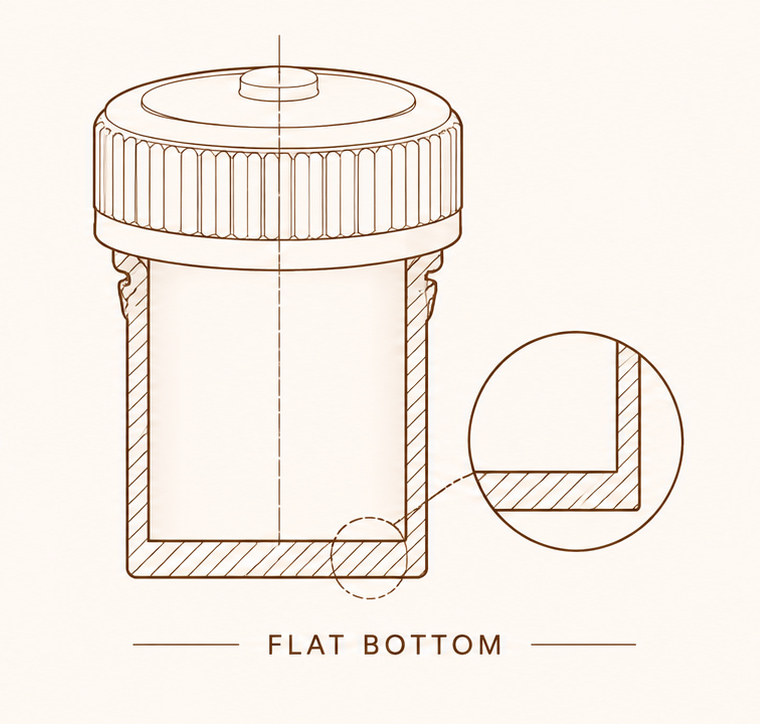
    A flat interior provides a broad area across the bottom of the vessel. It is an option for workflows that do not require the remaining liquid to collect in a narrow central point.


    At low liquid volumes, the solution may spread across the base instead of forming a deeper central pool. This geometric difference can make the final portion less convenient to retrieve with a pipette, depending on vessel diameter, liquid wetting and tip position.


    Consider a flat interior when a broad base suits your existing method and very small-volume retrieval is not the main selection criterion. Do not assume that a flat interior automatically gives faster digestion or evaporation.
  • #

    V-Shaped Bottom: Collecting Small Volumes 

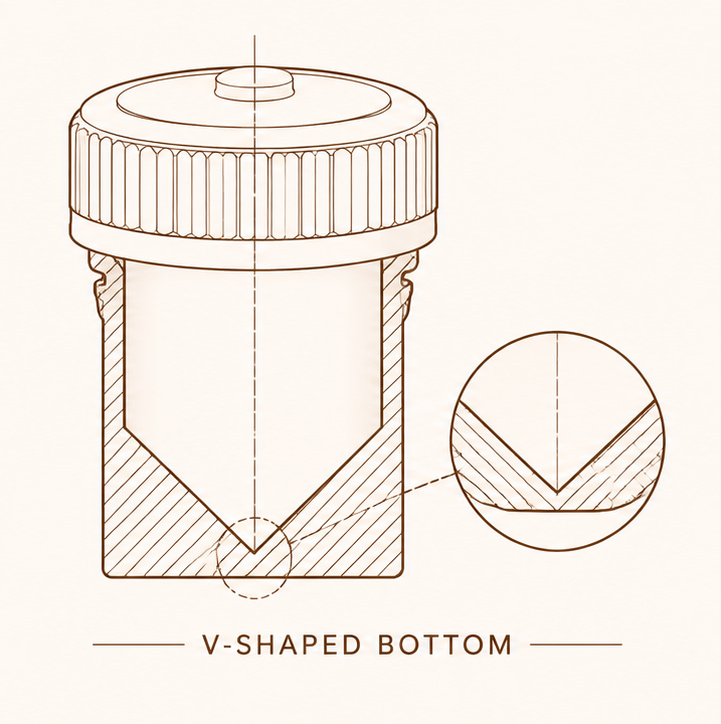
    A V-shaped, or conical, interior narrows toward the bottom. This geometry helps collect small amounts of solution in a localized area for withdrawal.


    It is worth considering when the workflow involves a small final solution volume or transfer of a limited sample. For example, a laboratory redissolving an evaporated residue in a small volume can assess whether a conical interior makes the final transfer easier.


    Check the cone depth and angle against the pipette tip or sampling probe. A conical bottom does not guarantee complete recovery: liquid retained on the walls, undissolved material and the transfer procedure still matter.Check the cone depth and angle against the pipette tip or sampling probe. A conical bottom does not guarantee complete recovery: liquid retained on the walls, undissolved material and the transfer procedure still matter..

  • #

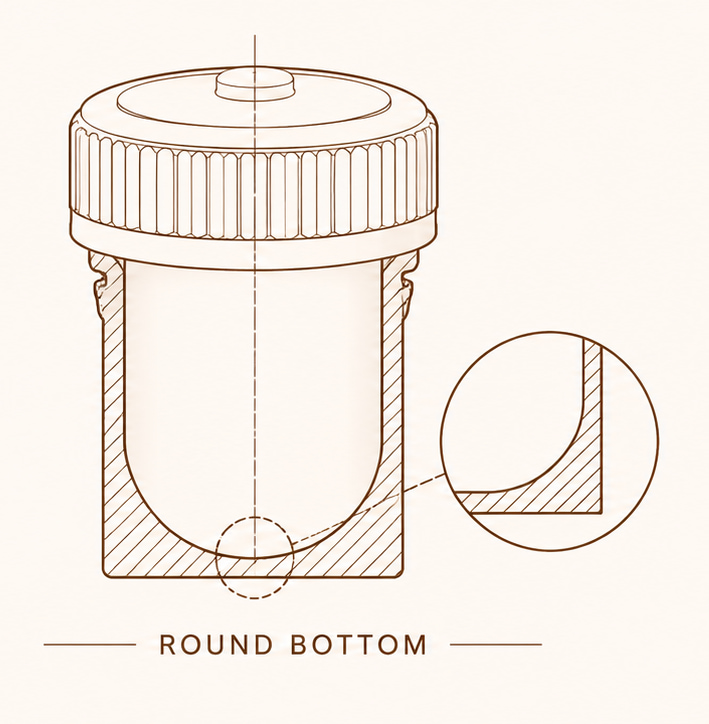
    U-Shaped Bottom: A Rounded Int

    A U-shaped interior has a curved bottom transition rather than a pointed tip or an abrupt flat-bottom corner. This can reduce places where undigested particles become trapped.

    Rounded interiors are therefore worth considering for rock and mineral sample preparation, especially where residue rinsing and transfer are recurring steps. The practical advantage is access to the material during handling; a rounded bottom does not itself make a resistant mineral dissolve.

    Evaluate the design with your sample matrix and rinsing procedure. It should not be described as universally cleaner or more efficient without comparative testing.


--------------占位---------------

A Practical Selection Guide


Your main requirement Interior to consider What to check
A broad internal base Flat Vessel diameter and retrieval at the lowest working volume
Collecting a small remaining solution volume V-shaped / conical Cone geometry and pipette or probe access
Rinsing residues from the bottom transition U-shaped / rounded Internal curvature and residue behavior
Compatibility with a hotplate or digestion block Assess separately from the internal shape External base, dimensions and approved operating conditions


These are starting points for selection, not performance rankings. If the bottom shape is being changed in an established analytical method, compare transfer completeness, procedural blanks and repeatability under the same conditions.


What Bottom Shape Does Not Tell You

Bottom geometry alone does not establish a vessel's pressure rating, permissible digestion temperature or compatibility with a microwave system. Confirm the specifications of the complete vessel and closure for the intended method. A material temperature range should not be treated as a sealed-vessel operating limit.


Selecting an NJBinglab PFA Vial


NJBinglab lists PFA vials with flat, V-shaped and U-shaped interiors, including 7 mL and 30 mL options. Availability should be checked for the required capacity and configuration.


For product selection, send us your sample type, acid system, initial and final solution volumes, heating method and transfer requirements. Include any constraints on vessel dimensions or pipette access. We can review suitable standard options and discuss customization where a different configuration is needed.


Leave A Message

Leave A Message
If you are interested in our products and want to know more details,please leave a message here,we will reply you as soon as we can.
submit
Contact Us :info@njbinglab.com

Home

Application

contact

About
