
Leave A Message
If you are interested in our products and want to know more details,please leave a message here,we will reply you as soon as we can.

Inductively Coupled Plasma Mass Spectrometry (ICP-MS) has become one of the most powerful analytical techniques for trace and ultra-trace elemental analysis. Modern ICP-MS instruments can routinely measure concentrations at the parts-per-trillion (ppt) level and, in some applications, even lower.
However, as detection limits decrease, contamination becomes one of the greatest challenges facing analytical laboratories. In many cases, the accuracy of ICP-MS results is no longer limited by the instrument itself but by impurities introduced during sample preparation.
Among all potential contamination sources, laboratory acids are often underestimated.
This article explains why acid purification is critical for ICP-MS analysis and how purified acids can improve data quality, reduce blanks, and enhance laboratory efficiency.
Acids play a central role in ICP-MS workflows.
They are commonly used for:
Sample digestion
Sample dissolution
Dilution of standards
Instrument cleaning
Storage of analytical solutions
Preparation of calibration standards
Common acids include:
Nitric acid (HNO₃)
Hydrochloric acid (HCl)
Hydrofluoric acid (HF)
Sulfuric acid (H₂SO₄)
Because these acids come into direct contact with samples, any impurities they contain can be introduced into the analytical process.
Many laboratories assume that commercially available high-purity acids are sufficiently clean for all applications.
While this may be true for routine analysis, ultra-trace elemental measurements often require significantly lower background levels.
For example, trace impurities of:
Lead (Pb)
Uranium (U)
Thorium (Th)
Iron (Fe)
Rare Earth Elements (REEs)
may already be present in commercial acids at concentrations high enough to affect analytical results.
When measuring samples containing only a few ppt of these elements, the contribution from acid impurities may become comparable to or even exceed the concentration present in the sample.
The result is:
Elevated blanks
Poor detection limits
Reduced accuracy
Increased uncertainty
A blank is a solution that contains all reagents used during sample preparation but no actual sample.
Blanks are used to determine background contamination introduced by:
Acids
Water
Labware
Environmental exposure
Sample handling procedures
High blank values can significantly impact analytical quality.
Typical consequences include:
Higher blank concentrations increase the minimum concentration that can be reliably detected.
Variability in contamination levels causes greater fluctuations between measurements.
Background contamination may artificially increase measured concentrations.
In ultra-trace analysis, elevated blanks can undermine confidence in reported results.
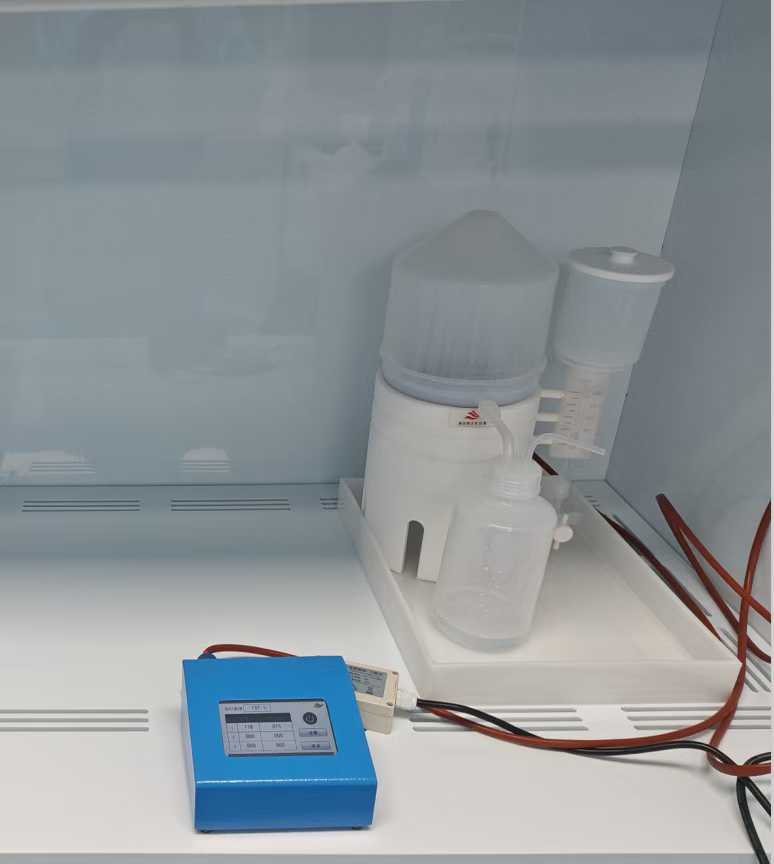
One of the most effective methods for obtaining ultra-pure acids is sub-boiling distillation.
Unlike conventional boiling, sub-boiling systems gently heat the acid below its boiling point.
The purified acid evaporates and condenses while most metallic impurities remain in the original reservoir.
This process provides several advantages:
High purification efficiency
Minimal aerosol formation
Reduced contamination risk
Excellent recovery of purified acid
Sub-boiling distillation is widely used in:
Geochemistry laboratories
Isotope laboratories
Environmental monitoring facilities
Semiconductor research laboratories
Nuclear science laboratories
Purified acids typically contain substantially lower concentrations of trace metal impurities than standard commercial reagents.
This directly contributes to lower analytical blanks.
Reducing background contamination enables more reliable measurement of ultra-low elemental concentrations.
Cleaner reagents result in more consistent analytical performance between batches.
Researchers can be more confident that measured concentrations originate from the sample rather than laboratory contamination.
Purchasing ultra-high-purity acids can be expensive.
Many laboratories reduce operating costs by purifying analytical-grade acids in-house using acid purification systems.
Geochemical laboratories frequently analyze:
Rocks
Sediments
Soil samples
Groundwater
Seawater
Isotope tracers
Many of these applications involve ultra-trace elemental measurements where contamination control is essential.
For example:
Rare Earth Element (REE) analysis
U-Pb geochronology
Sr-Nd isotope studies
Trace metal monitoring
In these workflows, purified acids are often considered a fundamental requirement rather than an optional improvement.
Acid purity alone is not enough.
The purified acid must also be stored and handled using suitable containers.
PFA labware is widely preferred because of its:
Extremely low metal background
Excellent chemical resistance
High temperature stability
Compatibility with strong acids
Many laboratories combine acid purification systems with PFA bottles, PFA beakers, and PFA digestion vessels to maintain reagent purity throughout the analytical process.
As ICP-MS technology continues to push detection limits lower, contamination control becomes increasingly important.
Even the most advanced ICP-MS instrument cannot compensate for impurities introduced during sample preparation.
Acid purification helps laboratories:
Reduce blank levels
Improve detection limits
Increase data quality
Enhance reproducibility
Lower operating costs
For laboratories engaged in ultra-trace elemental analysis, purified acids are not simply a convenience—they are an essential component of a reliable analytical workflow.
By combining sub-boiling acid purification systems with high-purity PFA labware, researchers can significantly improve the quality and confidence of their ICP-MS results.
Leave A Message